Blog
Industrial decarbonization in Quebec: Does Bill 17 actually change the game?
9 March 2026

Blog
9 March 2026
Reducing our GHG emissions is essential. But it won't be enough.
That's the message delivered this week by Frédéric Lalonde (Hopper), Sophie Forest (Brightspark) and Alain Lemieux (Zone d'innovation de la Vallée de la transition énergétique) in an opinion piece published in La Presse, co-signed by the CEOs of Deep Sky, Svante and Skyrenu, the Chamber of Commerce of Metropolitan Montreal, BMO, and National Bank.
When that many economic players align on the same conclusion, it signals an urgent need for clarity. At ATIS Énergie, we share this view, and it connects directly to what we're seeing on the ground with our industrial clients across Quebec.
Even in a scenario where every reduction effort is fully deployed, Quebec will still emit roughly 13 million tonnes of CO₂ per year by 2045–2050, according to the Comité consultatif sur les changements climatiques.
These emissions won't stem from a lack of ambition. They'll come from sectors where full industrial decarbonization is technically out of reach in the near to medium term: heavy industry (cement plants, aluminum smelters), agriculture and aviation.
The analogy used in La Presse is apt: when there's a flood, you have to shut off the water supply and pump out what's already there. Cutting emissions is shutting off the supply. But those 13 million residual tonnes are already on the floor.
Until now, carbon capture and storage (CCS) in Quebec lacked a clear regulatory framework. Without defined rules in place, there was no way to move from exploratory projects to infrastructure deployed at industrial scale.
Without that framework, Quebec was also missing out on a major financial lever: the Carbon Capture, Utilization, and Storage (CCUS) Investment Tax Credit (ITC), which covers between 37.5% and 60% of eligible investments, but only in provinces with the required regulatory structure in place.
Bill 17 closes that gap. It lays the groundwork for a permanent geological CO₂ storage framework: underground reservoir exploration, rigorous environmental oversight and long-term monitoring mechanisms.
This isn't a silver bullet. It's a piece Quebec could no longer afford to leave out of its climate toolkit.
At ATIS Énergie, we've been supporting Quebec industrial organizations through their decarbonization plans for several years. The debate reignited in La Presse confirms what we're seeing on the ground. That an effective industrial decarbonization strategy rests on three complementary levels.
1. Reduce at the source An industrial energy audit is always the first step. It identifies thermal losses, overconsumption and process optimization opportunities, often with fast payback periods. This is where the majority of short-term gains are within reach.
2. Optimize systems Industrial heat recovery, whether from condensers, compressors or hot effluents, is one of the most underutilized levers in Quebec manufacturing facilities. Combined with industrial process electrification and rigorous industrial energy engineering, it structurally reduces the thermal load that needs to be offset.
3. Eliminate residual emissions Point-source capture, direct air capture (DAC), permanent geological storage. For sectors that can't yet decarbonize any other way, this is a necessity, not an option.
Something else we consistently observe is that carbon capture infrastructure is energy-intensive. It requires facilities that are already optimized from a thermal management standpoint, properly sized electrical capacity and rigorous mechanical integration. An energy-inefficient plant will struggle to absorb a CCS system and will see operating costs spiral.
That's why industrial thermal management isn't in competition with carbon capture. It's the condition for its success.
Quebec holds real competitive advantages in this transition:
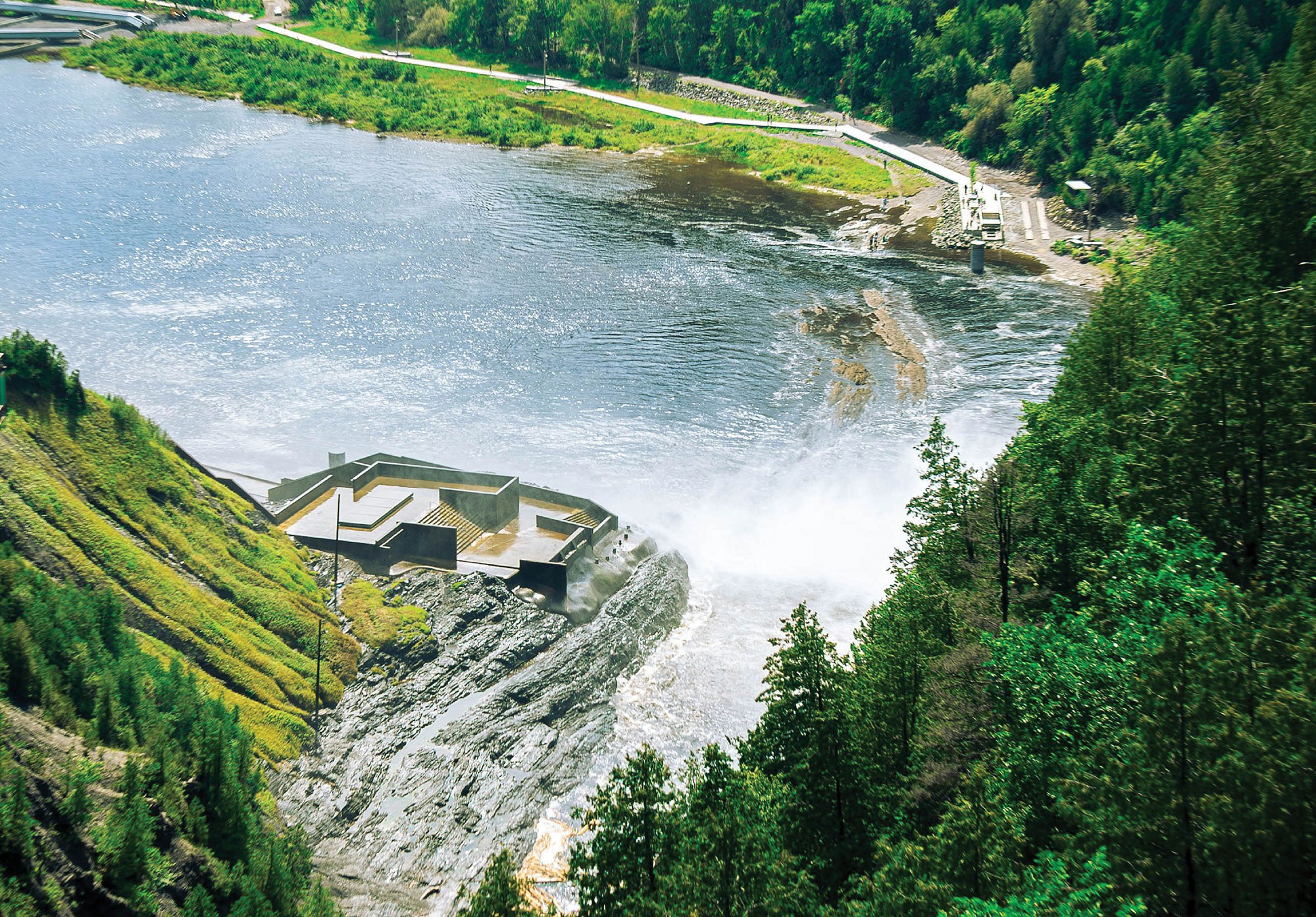
Clean, abundant hydroelectricity, essential for ensuring that process electrification and carbon capture deliver a net climate benefit
Favourable geological potential for underground CO₂ storage
A growing technology ecosystem: Deep Sky, Svante, Skyrenu
Access to federal tax credits, contingent on having a robust regulatory framework in place
The global carbon removal market is growing fast, driven by European and North American demand for permanent, verifiable solutions. Jurisdictions that offer a stable framework will attract investment, and Quebec can be one of them.
The adoption of Bill 17 sends a clear signal: Quebec's industrial decarbonization strategy is evolving. It's no longer betting solely on emission reductions. It now integrates permanent carbon removal as a complementary lever.
For industrial companies, the question is no longer just "how do we reduce our GHG emissions on the plant floor?" It's "how do we build a complete company-wide decarbonization plan: reduction, thermal optimization, elimination?"
At ATIS Énergie, we support our clients through industrial energy audits, thermal process optimization, industrial heat recovery and high-performance mechanical system integration. This upstream work is a prerequisite for any deep industrial thermal decarbonization strategy.
Carbon neutrality won't be achieved through a single solution. It will be achieved through the right combination of levers and the rigour with which they're implemented.
Is your company dealing with hard-to-reduce residual emissions? Contact our team to explore the first steps of an industrial decarbonization plan tailored to your processes.


28 November 2025
The new federal budget marks a real shift for Canada’s industrial sector. Rather than adding new hurdles, the government is doubling down on tax incentives designed to fast-track decarbonization and drive much-needed modernization across production lines. At the heart of these measures is the accelerated capital cost allowance, better known as the ‘super-deduction.’ This powerful tool allows companies to immediately deduct 100% of their investments in clean equipment and technologies from their federal taxable income.
10 February 2025
In an economic context marked by unprecedented pressures, Québec businesses must redouble their efforts to remain competitive. Between the threat of increased export tariffs, trade tensions and the anticipated increase in the cost of electricity or natural gas, it is becoming essential to optimise every available resource. One of the most powerful levers to address these challenges is investment in energy productivity.
10 November 2025
As industries face growing pressure to decarbonize, Renewable Thermal Systems (RTS) like heat pumps, hot water systems and thermal energy storage offer a practical, cost-effective solution to make industrial processes cleaner and more efficient.